FCC Complaint
Field Manual
"The button they hope you don't know exists."
This guide documents the FCC informal complaint process — a free federal mechanism that forces your carrier to respond in writing, in 30 days, to a government agency. It does not require a lawyer. It does not cost money. It took one business day to escalate a locked phone dispute to T-Mobile's CEO office. This is a verified case study, not a hypothetical.
The FCC Informal Complaint
"Not a customer service ticket. A federal record."
The FCC's Consumer Inquiries and Complaints Center accepts informal complaints from any consumer against any telecommunications provider operating in the United States. Filing one costs nothing and takes about 10 minutes.
When you file, the FCC assigns a ticket number, logs it in a federal database, and formally serves it on your carrier. The carrier is then legally required to submit a written response to the FCC within 30 days and to contact you directly to attempt resolution.
This is categorically different from calling customer support, escalating to a supervisor, or filing a BBB complaint. Those are internal service channels — the company controls the outcome. An FCC complaint creates an external federal record that the carrier must respond to on paper, addressed to a government agency.
Friction Checklist
"If front-line support has failed you twice, you are already past the threshold."
| Situation | Use FCC? |
|---|---|
| Carrier refuses to unlock a fully paid-off device | YES |
| Carrier applied incorrect charges and won't reverse | YES |
| Carrier admitted a mistake but won't fix it | YES |
| Unlock request denied despite meeting stated requirements | YES |
| Service agreement terms not honored at point of sale | YES |
| Supervisor escalation went nowhere after 2+ attempts | YES |
| Carrier gave you a refund but didn't fix the root issue | YES |
| General dissatisfaction with wait times or service quality | WEAK CASE |
| You haven't tried contacting the carrier yet | NOT YET |
The T-Mobile Record
"Filed at 10 AM. Served on T-Mobile by 2 PM. CEO office by next morning."
On January 26, 2026, a formal FCC complaint was filed regarding T-Mobile's refusal to unlock a fully paid-off Motorola Moto G Power 2025. T-Mobile had already issued a full refund for a documented retail misrepresentation — acknowledging the error — but continued enforcing its 40-day usage timer on the locked hardware.
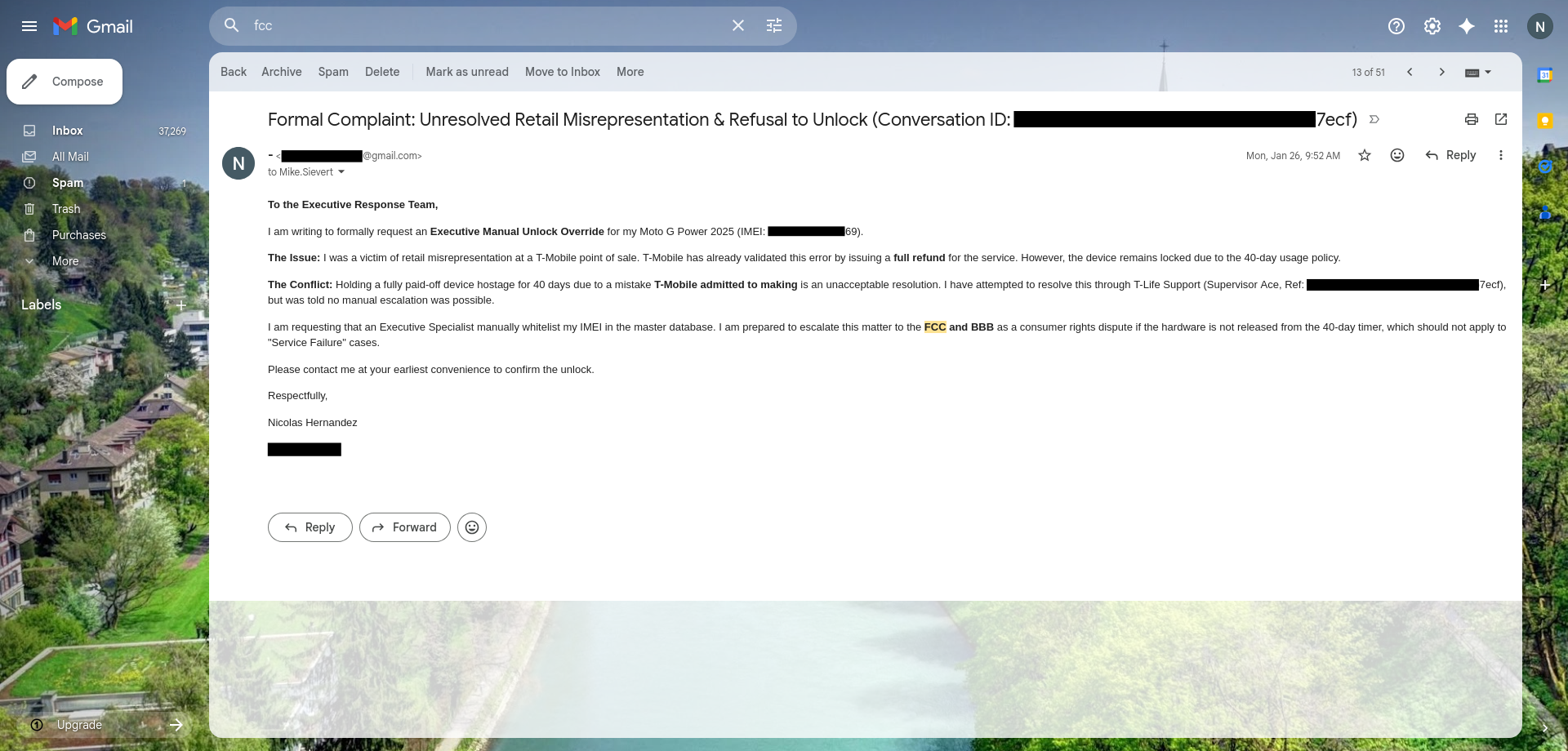
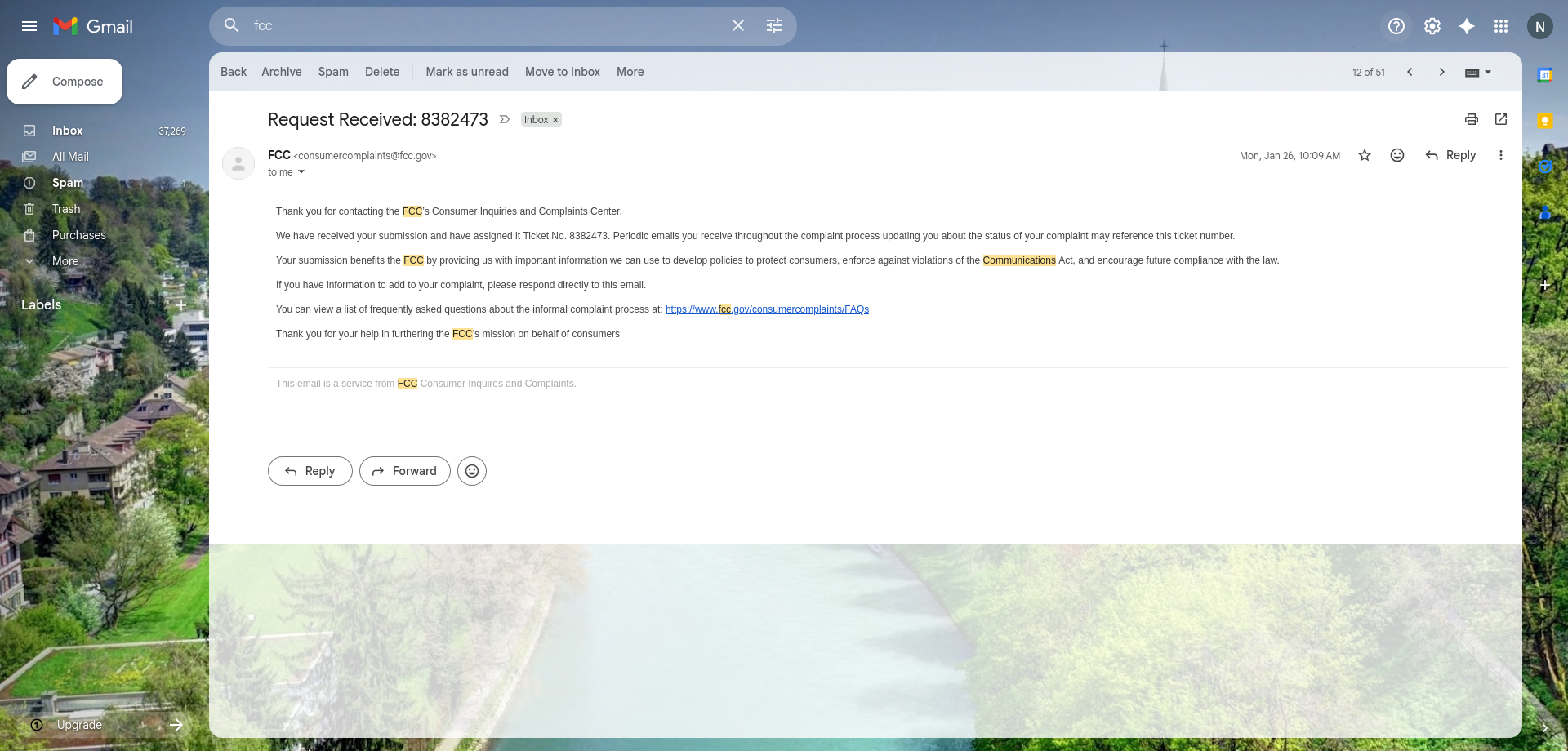
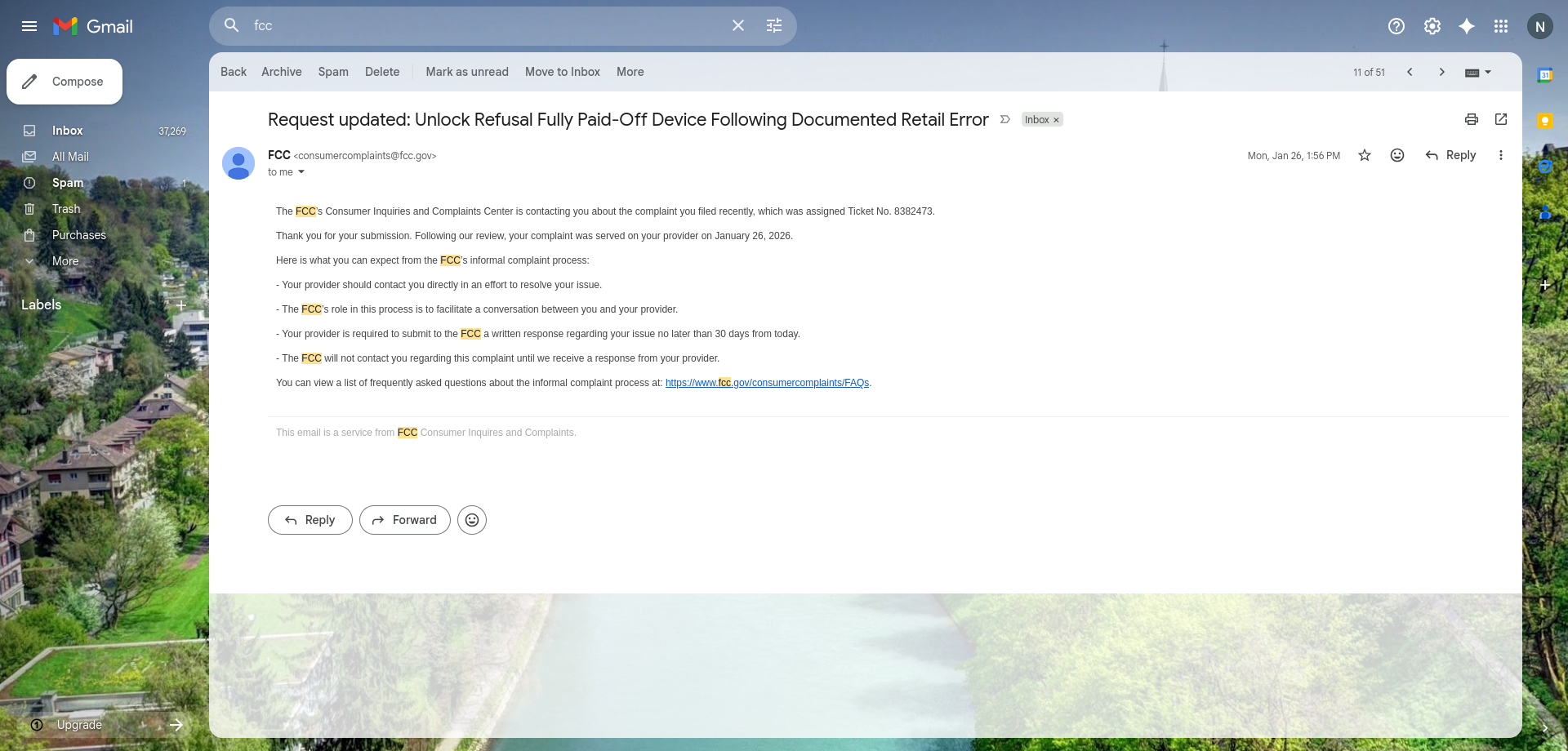
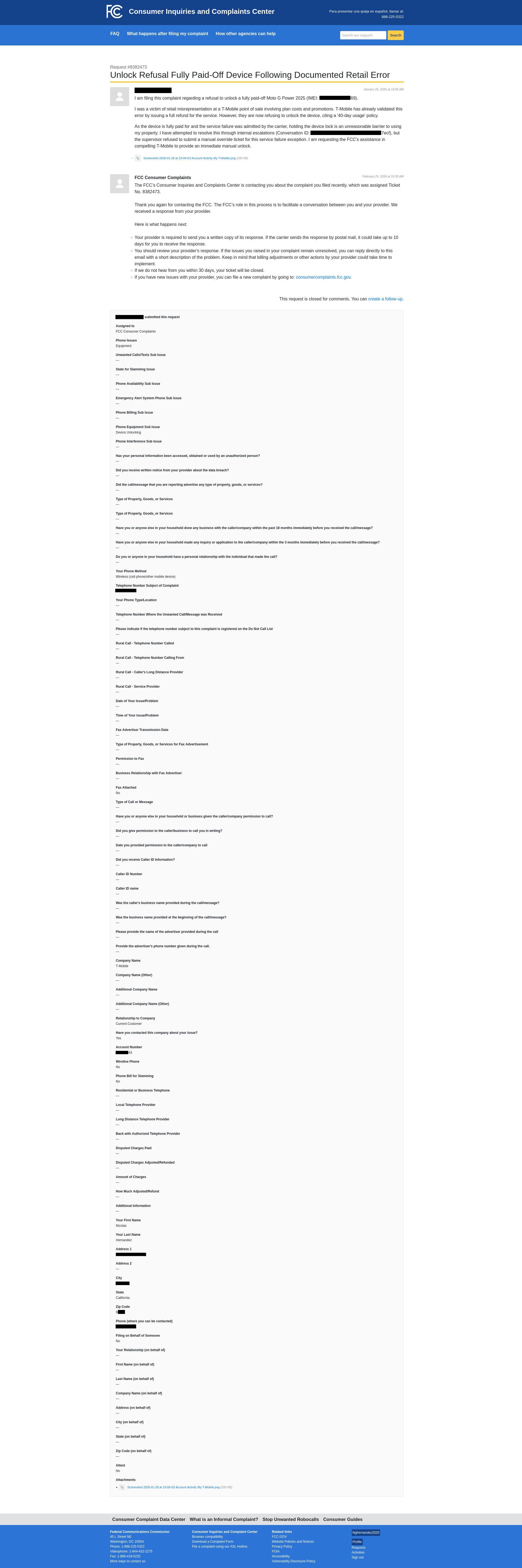
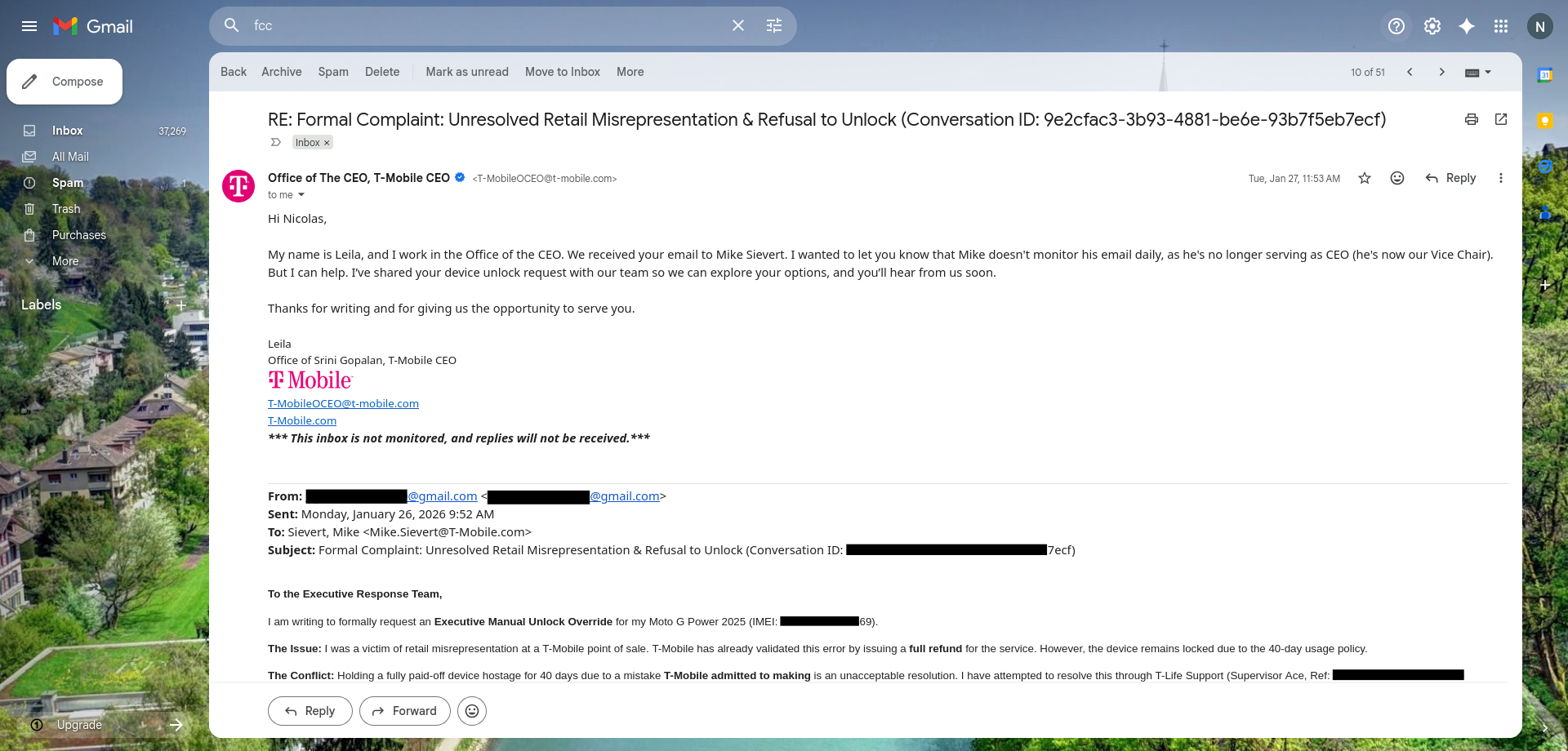
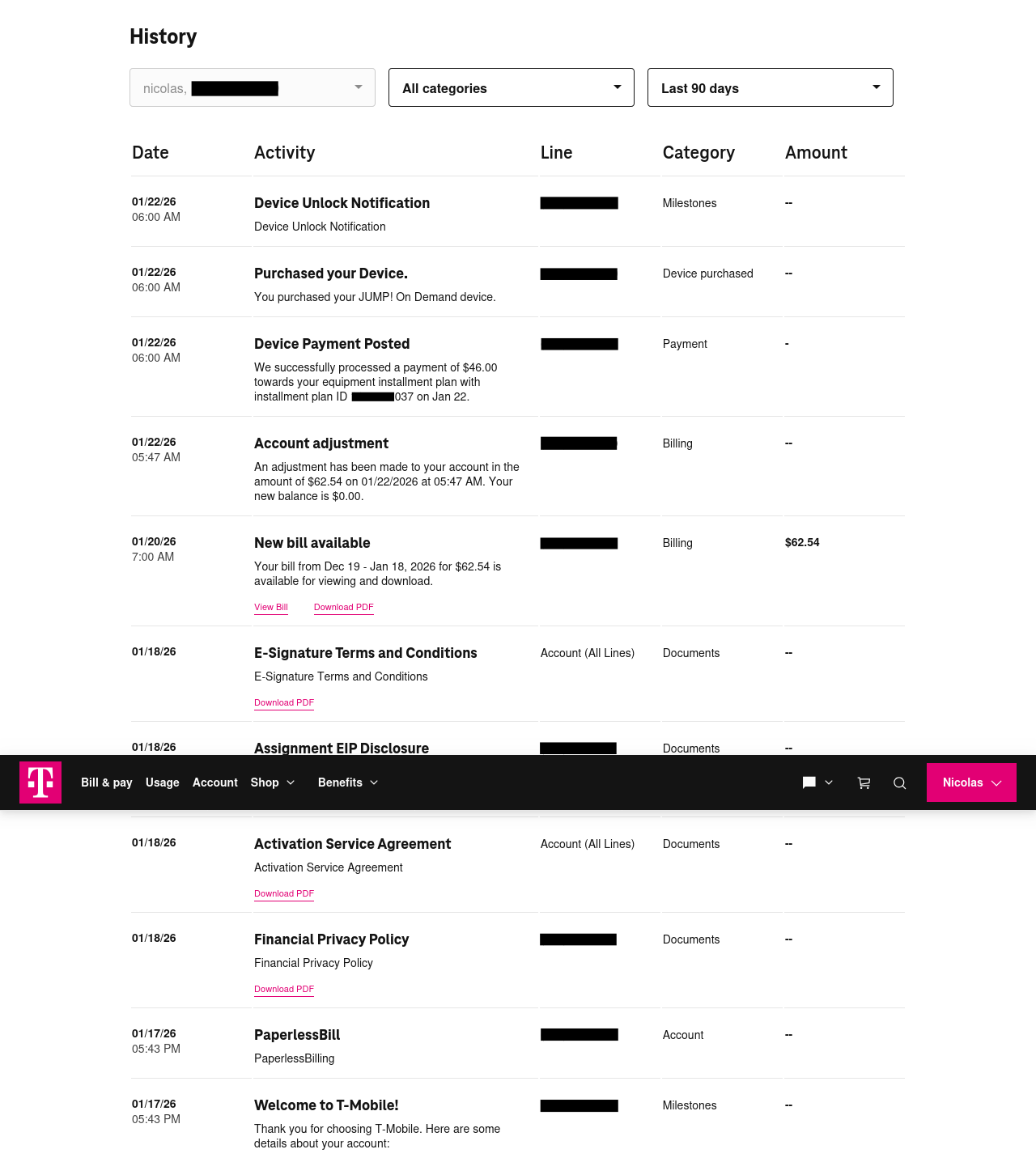
T-Mobile's written response to the FCC confirmed the account was activated January 17, 2026, and that the device had not met the 40-day usage requirement at the time of the unlock request. Despite citing this policy in writing, T-Mobile completed the unlock anyway — and acknowledged the inconvenience to the customer.
Translation: The carrier put in writing to a federal agency that they enforced a policy they knew conflicted with a customer's documented service failure, then unlocked the device. The paper trail is the win.
Filing Protocol
"The difference between a complaint that gets forwarded to Tier 1 and one that lands on an executive's desk is how it's written."
File at: consumercomplaints.fcc.gov
Select the category that matches your dispute. For unlock issues: Phone → Equipment → Unlocking. For billing fraud: Phone → Billing. Do not overthink the category — the complaint text is what matters.
Include: your device (make, model, IMEI if you have it), the specific issue, dates of prior escalation attempts, conversation or case reference numbers, and what resolution you are requesting. Do not include emotional language. Write as if you are filing a report, not venting.
If the carrier admitted an error, issued a refund, or cited a specific policy — document it. The most effective complaints establish a logical contradiction: the carrier's own behavior conflicts with its stated policy or prior acknowledgment.
End with a clear, specific ask. "Unlock the device" is better than "resolve this situation." "Reverse the $62.54 charge" is better than "make this right." Give them a concrete action to take.
Do not wait for the FCC process to run before contacting the carrier again. File the FCC complaint and then email the carrier's executive team the same day. Reference the FCC ticket number in your email. This is the combination that creates urgency on both tracks.
Complaint Template
"Adapt to your situation. Keep it factual. Remove anything that sounds like frustration."
The Process After Filing
| Stage | Timeline | What It Means |
|---|---|---|
| Ticket Assigned | Minutes | Complaint logged. You receive an email with ticket number. |
| Complaint Served on Carrier | Same day – 1 week | FCC formally notifies your carrier. The clock starts. |
| Carrier Contacts You | 1–5 business days (often faster) | Usually an executive or customer relations team — not Tier 1 support. |
| Carrier Written Response to FCC | Within 30 days | Carrier submits formal response to the FCC. You are CC'd. |
| FCC Review | After carrier response | FCC reviews and may follow up. Complaint remains in federal record regardless. |
Document the Outcome
Once your carrier resolves the issue, document the resolution before replying to the FCC. Keep:
If they send a letter or email, save it. This is an admission of their position on record.
Screenshot your account history showing the resolution event (unlock notification, credit posted, etc.) with timestamps.
This is your federal case reference. If the same issue recurs, citing a prior FCC ticket number in a new complaint carries significant weight.